Horizon Mapper
    Drive · walk · cycle · 5–60 minutes

    Catchment Area Analysis

    Turn a selected origin into a travel-time catchment, then inspect the reachable population, geography and available POI context in Horizon Mapper.
    • Driving
    • Walking
    • Cycling
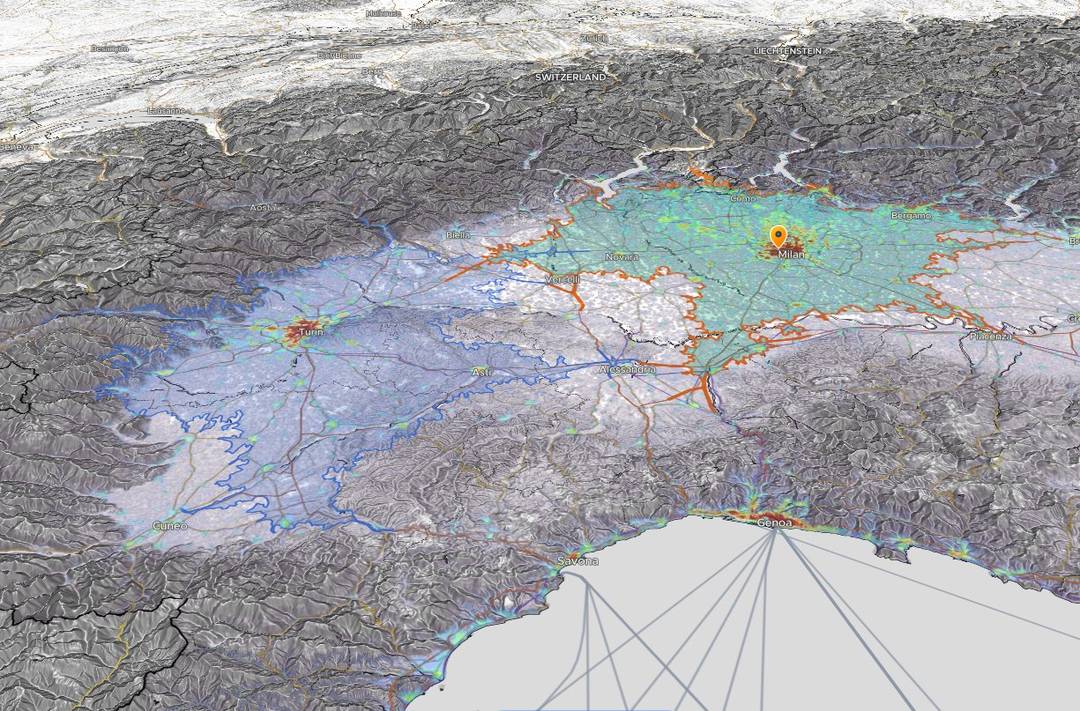
    horizonmapper.com — 60 min drive · Milan and Turin
    Horizon Mapper showing two 60-minute driving catchments shaped by the road network
    Reach follows the mapped network

    Actual Horizon Mapper drive-time boundaries around Milan and Turin.

    REAL APPCATCHMENTS
    Configure a travel-time catchment

    Start a catchment analysis

    Search for an origin, choose travel mode and time, then generate the live network catchment.

    Analysis settings

    The app URL contains coordinates and settings only; your typed address is not added to it.

    Choose the origin on the map
    Move from outline to evidence

    Questions a catchment can help answer

    The boundary is the start of the analysis. Its value comes from keeping the same origin, travel assumptions and data layers when you compare alternatives.

    How much demand is reachable?

    Estimate population context inside one consistent travel-time boundary.

    What supply sits inside it?

    Add available points of interest to inspect services, competitors or complementary places.

    How do locations compare?

    Create comparable catchments, then review their geography and evidence side by side.
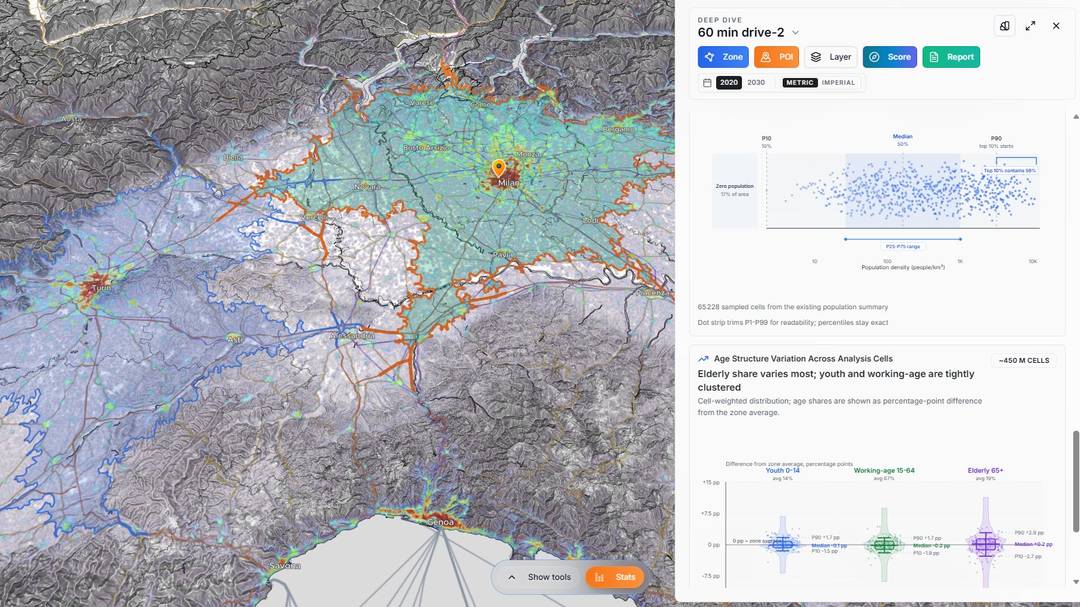
    horizonmapper.com — catchment deep dive
    Horizon Mapper Deep Dive panel showing population density evidence for a drive-time zone
    A working analysis sequence

    Define reach, then inspect what is inside

    1. Generate. Choose the origin, mode and time; the routing service returns a network-shaped boundary.
    2. Measure. Open the zone statistics and compare population context using the selected year.
    3. Challenge. Add POIs or other available layers and test whether the result still supports the decision.
    Interpretation guardrails

    A model of reach, not a promise of arrival

    Catchments depend on the mapped network, profile assumptions and routing coverage. Use consistent settings for comparison and validate important decisions with local evidence.

    Screen the next location

    Need to rank opportunities, not only define reach?

    Configure the site-selection workspace to examine demand and nearby supply together, then inspect the component evidence behind the ranking.